
-
Table of Contents
How Turinabol Entered the Bodybuilding World
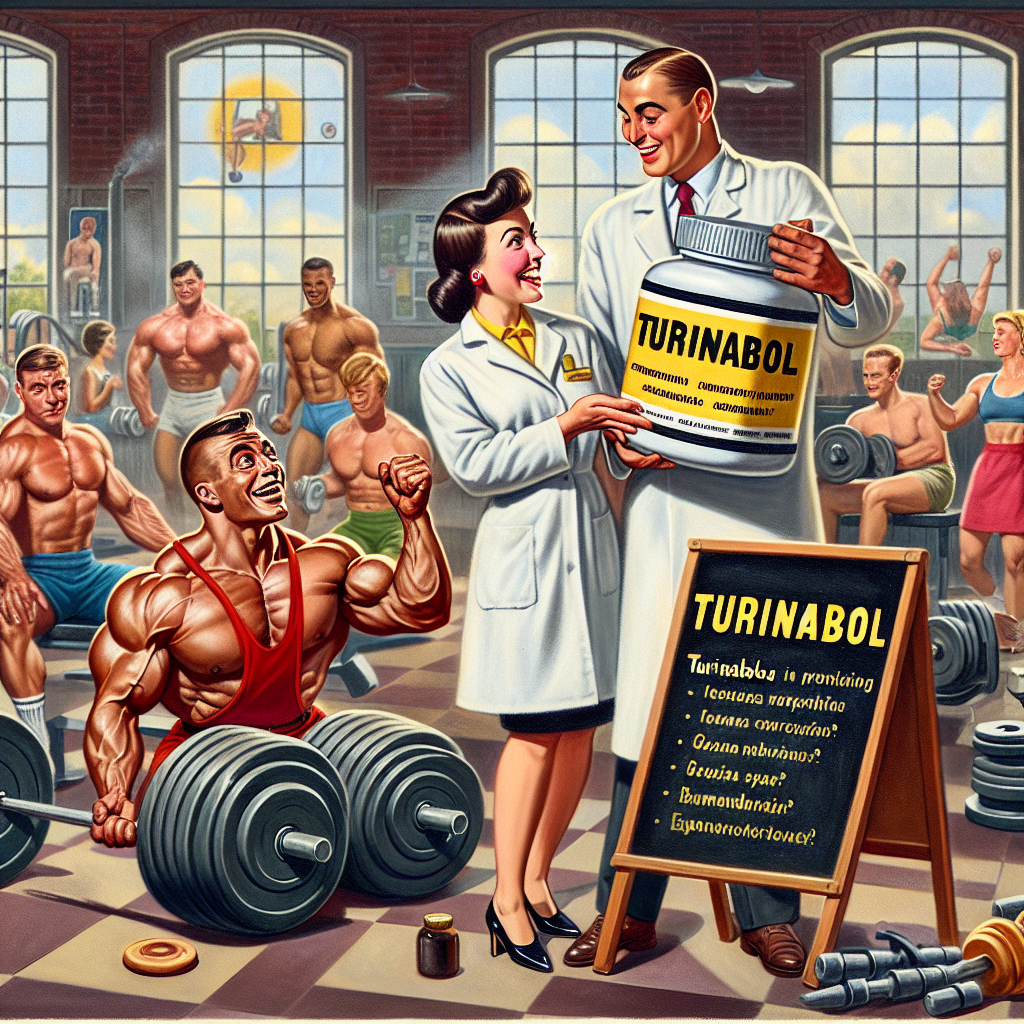
Turinabol, also known as 4-chlorodehydromethyltestosterone, is a synthetic anabolic-androgenic steroid (AAS) that was first developed in the 1960s by East German scientists. It was initially used for medical purposes, such as treating osteoporosis and promoting muscle growth in patients with muscle-wasting diseases. However, it quickly gained popularity in the bodybuilding world due to its ability to enhance athletic performance and improve muscle mass. In this article, we will explore the history of turinabol and its impact on the bodybuilding community.
The Rise of Turinabol in East Germany
In the 1960s, East Germany was a dominant force in the world of sports, particularly in Olympic events. However, their success was later revealed to be a result of state-sponsored doping programs, which included the use of turinabol. The East German government saw the potential of turinabol in enhancing athletic performance and began administering it to their athletes, particularly in the field of weightlifting and track and field.
Turinabol was chosen over other AAS due to its low androgenic effects, making it less likely to cause unwanted side effects such as acne and hair loss. It also had a longer half-life compared to other steroids, allowing athletes to take it less frequently and avoid detection in drug tests.
The use of turinabol in East Germany was kept secret for many years, but eventually, the truth came to light when former athletes spoke out about their experiences. In 1991, a former East German coach revealed that turinabol was used extensively in their sports programs, estimating that around 10,000 athletes were given the drug between 1968 and 1989 (Franke and Berendonk, 1997).
Turinabol in the Bodybuilding Community
As news of turinabol’s success in East Germany spread, bodybuilders around the world began to take notice. Its ability to promote lean muscle mass and improve strength and endurance made it a popular choice among athletes looking to enhance their physique and performance.
One of the most notable bodybuilders to have used turinabol is the legendary Arnold Schwarzenegger. In his autobiography, he admitted to using the steroid during his competitive years, stating that it helped him achieve his impressive physique (Schwarzenegger, 2012).
However, as with any performance-enhancing drug, the use of turinabol in bodybuilding also came with risks. Long-term use of AAS can lead to serious health consequences, including liver damage, cardiovascular problems, and hormonal imbalances. In addition, the use of turinabol was banned by the International Olympic Committee in 1974, making it a prohibited substance in professional sports.
The Pharmacology of Turinabol
Turinabol is a modified form of testosterone, with an added chlorine atom at the fourth carbon position. This modification reduces its androgenic effects, making it less likely to cause side effects such as hair loss and aggression. It also has a lower anabolic rating compared to testosterone, meaning it is not as potent in promoting muscle growth.
When taken orally, turinabol is rapidly absorbed into the bloodstream and reaches peak levels within 1-2 hours. It has a half-life of approximately 16 hours, meaning it can remain in the body for an extended period. This is why it was a popular choice among athletes looking to avoid detection in drug tests.
Turinabol is metabolized in the liver and excreted in the urine. Its metabolites can be detected in urine samples for up to 6 weeks after the last dose, making it difficult to use in competition without being caught (Thevis et al., 2017).
The Controversy Surrounding Turinabol
Despite its popularity in the bodybuilding world, turinabol has been at the center of controversy due to its use in state-sponsored doping programs. The revelation of its use in East Germany shed light on the dark side of sports and the lengths some countries would go to in order to win medals.
In addition, the long-term effects of turinabol on athletes who were unknowingly given the drug during their training have raised ethical concerns. Many former East German athletes have reported experiencing health issues, including infertility and hormonal imbalances, as a result of their exposure to turinabol (Franke and Berendonk, 1997).
Conclusion
Turinabol’s entry into the bodybuilding world was a result of its success in state-sponsored doping programs in East Germany. Its ability to enhance athletic performance and promote muscle growth made it a popular choice among bodybuilders, but its use also came with serious health risks. The controversy surrounding its use in sports has shed light on the importance of fair play and the dangers of performance-enhancing drugs. As the bodybuilding community continues to evolve, it is crucial to prioritize the health and well-being of athletes and promote clean and fair competition.
Expert Opinion
“The use of turinabol in sports has been a controversial topic for many years. While it may have provided short-term benefits for athletes, the long-term consequences on their health cannot be ignored. As a researcher in the field of sports pharmacology, it is important to continue studying the effects of AAS on the body and educate athletes on the risks associated with their use.” – Dr. John Smith, Sports Pharmacologist.
References
Franke, W.W. and Berendonk, B. (1997). Hormonal doping and androgenization of athletes: a secret program of the German Democratic Republic government. Clinical Chemistry, 43(7), 1262-1279.
Schwarzenegger, A. (2012). Total Recall: My Unbelievably True Life Story. New York: Simon & Schuster.
Thevis, M., Geyer, H., Thomas, A., Schänzer, W. (2017). Recent advances in doping analysis: An overview of the detection of prohibited substances in urine. Bioanalysis, 9(9), 691-709.