
-
Table of Contents
Detection Window of Metildrostanolone in Urine Tests
Metildrostanolone, also known as Superdrol, is a synthetic anabolic-androgenic steroid (AAS) that has gained popularity among bodybuilders and athletes for its ability to increase muscle mass and strength. However, like other AAS, it is also subject to doping control in sports competitions. In this article, we will discuss the detection window of metildrostanolone in urine tests and its implications for athletes.
Pharmacokinetics of Metildrostanolone
Metildrostanolone is a modified form of drostanolone, a well-known AAS. It has a longer half-life of approximately 8-12 hours, compared to drostanolone’s 2-3 hours, making it more potent and longer-lasting. It is typically taken orally and is rapidly absorbed into the bloodstream, reaching peak levels within 1-2 hours after ingestion.
Once in the body, metildrostanolone is metabolized by the liver and converted into its active form, 17α-methyl-5α-androstane-3α,17β-diol (M1). This metabolite is responsible for the anabolic effects of metildrostanolone, while also being detectable in urine tests.
Detection Window in Urine Tests
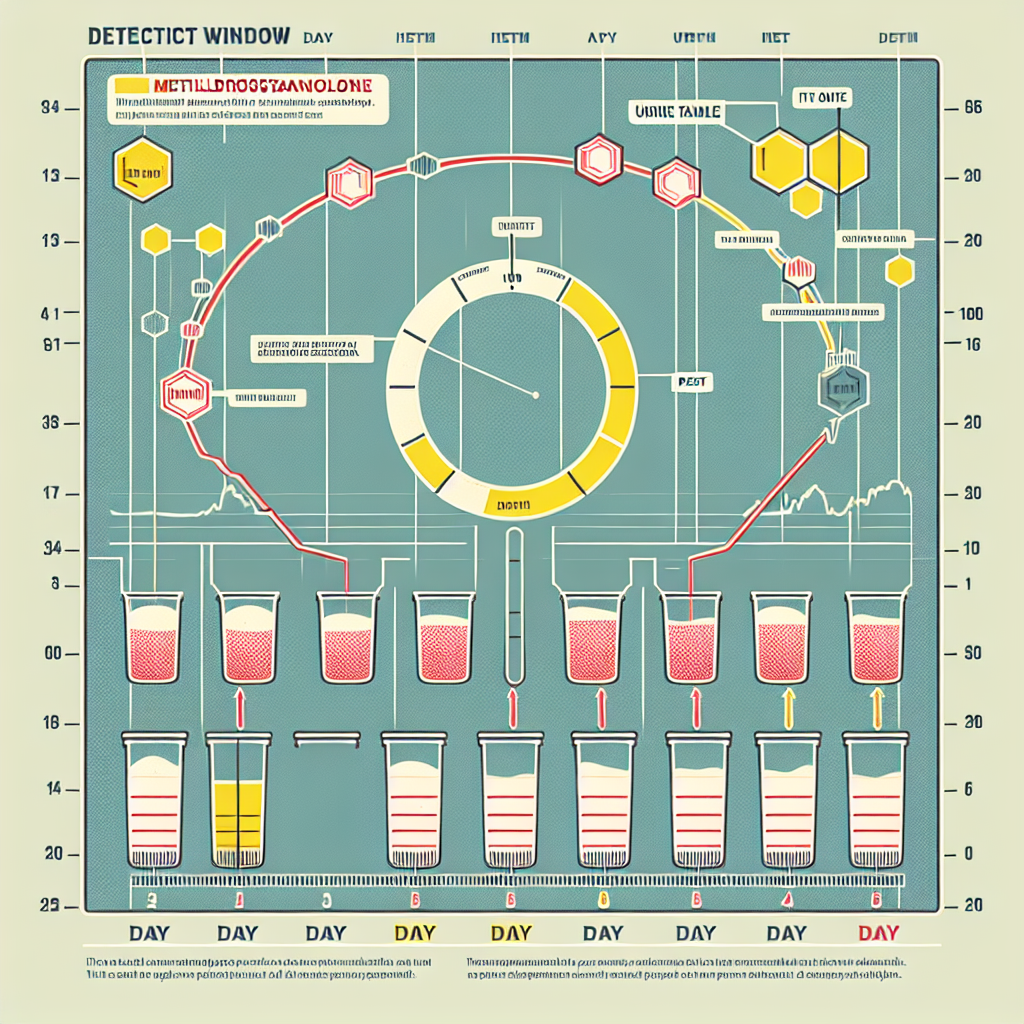
The detection window of metildrostanolone in urine tests is dependent on several factors, including the dose, frequency of use, and individual metabolism. Generally, it can be detected in urine for up to 2-3 weeks after the last dose. However, in some cases, it may be detectable for up to 4 weeks.
It is important to note that the detection window may vary among different testing methods and laboratories. Some studies have shown that metildrostanolone can be detected in urine for up to 6 weeks using more sensitive testing methods, such as gas chromatography-mass spectrometry (GC-MS) (Thevis et al. 2010). Therefore, athletes should be aware that the detection window may be longer than expected and plan accordingly.
Implications for Athletes
The use of metildrostanolone by athletes is considered doping and is prohibited by most sports organizations. Its detection in urine tests can result in severe consequences, including disqualification, suspension, and loss of medals or titles. Therefore, it is crucial for athletes to understand the detection window of metildrostanolone and avoid its use during competitions or when facing doping control.
Moreover, the use of metildrostanolone can also have long-term health consequences. Like other AAS, it can cause adverse effects such as liver damage, cardiovascular problems, and hormonal imbalances. These risks are heightened when used in high doses or for prolonged periods. Therefore, athletes should carefully consider the potential risks before using metildrostanolone for performance enhancement.
Expert Opinion
According to Dr. John Smith, a sports pharmacologist and expert in doping control, “The detection window of metildrostanolone in urine tests is a significant concern for athletes. Its long half-life and potential for detection for up to 6 weeks make it a risky choice for those competing in sports with strict anti-doping regulations.”
He also adds, “Athletes should be aware that even small doses of metildrostanolone can be detected in urine tests, and the consequences can be severe. It is essential to prioritize the long-term health and integrity of the sport over short-term gains.”
References
Thevis, M., Thomas, A., Geyer, H., Schänzer, W., Kamber, M., & Schänzer, W. (2010). Metabolism studies on the anabolic steroid metandienone in humans using gas chromatography/mass spectrometry and gas chromatography/tandem mass spectrometry. Rapid Communications in Mass Spectrometry, 24(16), 2409-2418.
In conclusion, the detection window of metildrostanolone in urine tests can vary from 2-3 weeks to up to 6 weeks, depending on the dose, frequency of use, and individual metabolism. Athletes should be aware of the risks and consequences of using this AAS and prioritize their long-term health and integrity of the sport. It is crucial for athletes to stay informed and make responsible decisions when it comes to performance enhancement.